🏆 Our Verdict
HubSpot stands out as a comprehensive CRM and inbound marketing platform, ideal for businesses seeking an integrated approach to customer relationship management, marketing automation, and sales tracking. Its ease of use and extensive feature set make it a top choice for companies of all sizes.
✅ Pros & ❌ Cons
Pros:
- 🔄 Integration across sales, marketing, and customer service modules.
- 📊 Advanced analytics and reporting tools.
- 🌐 Extensive third-party integrations.
- 🧑💼 User-friendly interface with robust training resources.
Cons:
- 💲 Higher cost for premium features.
- 📏 Limited customization in lower-tier plans.
- 📚 Steeper learning curve for advanced features.
📖 About HubSpot
Founded in 2006, HubSpot has evolved into a leader in inbound marketing, sales, and CRM software. It provides a comprehensive suite of tools designed to align sales and marketing efforts, improve customer experiences, and drive growth.
🎯 What’s In It For You?
HubSpot offers a holistic approach to managing customer relationships and marketing efforts, with features that cater to lead generation, email marketing, social media management, and more.
🚀 How It Works

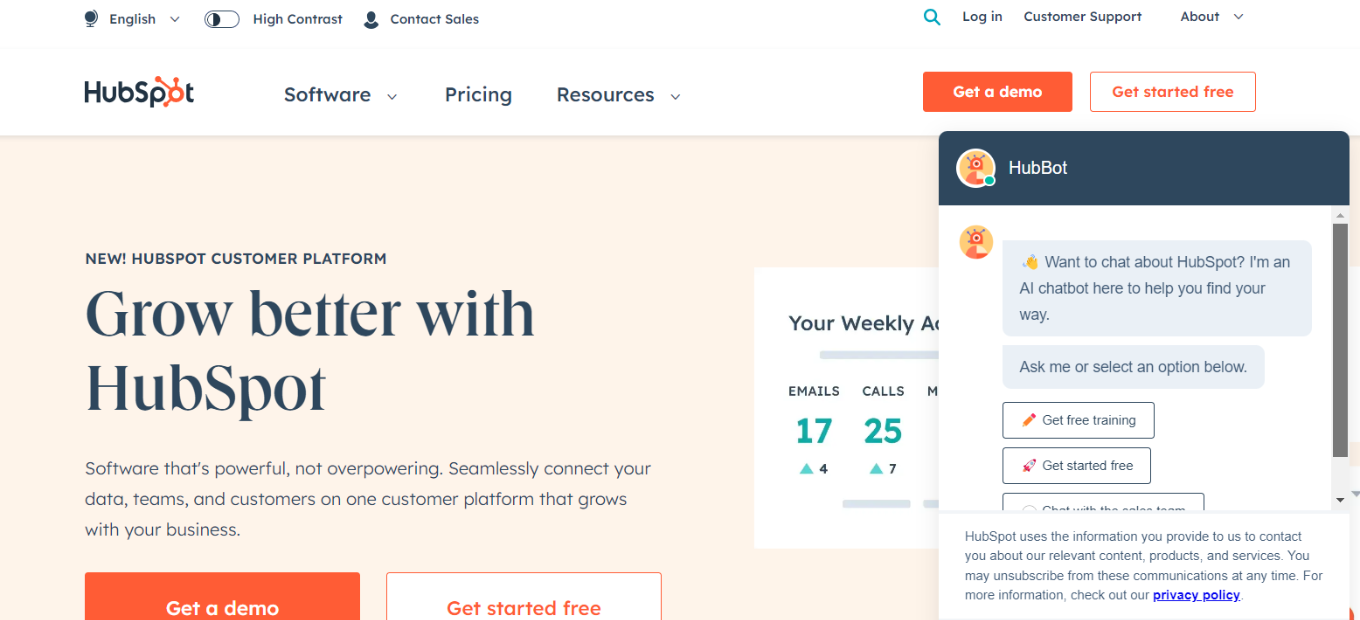
Signing Up for HubSpot
1. Visit the HubSpot Website
- Navigate to HubSpot: Go to HubSpot’s website.
- Find the Sign-Up Option: Look for a sign-up button or link, usually located on the top right corner of the website.
2. Choose a Plan
- Review the Plans: HubSpot offers various plans, including a free CRM and tiered pricing for more advanced features.
- Select a Plan: Choose a plan that suits your business needs. You can start with the free version or select a paid plan for additional features.
3. Create an Account
- Enter Your Information: Provide your email address, create a password, and fill in the required details.
- Business Information: You may need to enter some information about your business, like company size and industry.
4. Account Verification
- Check Your Email: After registering, you’ll receive an email from HubSpot.
- Verify Your Account: Open the email and click on the verification link to activate your account.
5. Set Up Your Account
- Complete the Setup: Once your account is verified, you’ll be directed to complete the setup, which may include adding more details about your business and personalizing your HubSpot experience.
- Onboarding Process: HubSpot might guide you through an onboarding process to help you understand how to use the platform effectively.
6. Integrate Your Tools
- Connect Your Tools: If you have existing tools like email, social media accounts, or other marketing tools, you can integrate them with HubSpot.
- Authorization: You’ll need to authorize HubSpot to connect to these tools.
7. Explore HubSpot Features
- Familiarize Yourself: Start exploring the various features of HubSpot, such as contact management, email marketing, lead generation tools, and more.
- Use Helpful Resources: HubSpot provides tutorials, guides, and a comprehensive knowledge base to help you maximize the platform.
8. Start Using HubSpot
- Begin Your Marketing Efforts: You can now start using HubSpot for your marketing, sales, and service activities.
🔗 Helpful Tips
- Take Advantage of Free Training: HubSpot Academy offers free training and certifications that can help you get the most out of your HubSpot experience.
- Utilize Customer Support: If you need assistance, HubSpot’s customer support team is available to help.
By following these steps, you can successfully sign up and start using HubSpot to enhance your business’s marketing, sales, and service efforts.
💲 HubSpot Pricing Overview

🌟 Pricing Tiers
HubSpot offers various pricing tiers, each designed to suit different business needs and scales. These tiers typically range from basic free options to more advanced, feature-rich paid plans.
✅ Free Tools
- Overview: HubSpot provides a range of free tools, particularly in its CRM offering.
- Included Features: Basic features such as contact management, deal tracking, and task management are typically included.
💼 Starter Plans
- Target Audience: Ideal for small businesses or startups beginning to expand their marketing, sales, or service efforts.
- Key Features: Enhanced functionalities over the free tier, including additional marketing tools and customer support options.
🚀 Professional Plans
- Designed For: Medium-sized businesses looking for more advanced capabilities.
- Advanced Features: Includes automation, detailed analytics, and deeper customization options.
🏢 Enterprise Plans
- Suited For: Large businesses or enterprises requiring extensive, scalable solutions.
- Premium Offerings: Advanced features like increased limits, sophisticated analytics, and extensive customization abilities.
🤔 Considerations
- Scalability: Each plan is designed to grow with your business, offering more features and capabilities as your needs evolve.
- Integration and Ecosystem: HubSpot’s pricing also factors in its extensive ecosystem of integrations and add-ons, allowing businesses to customize their HubSpot experience.
🥊 Competition
HubSpot
✅ Pros
- 👍 User-Friendly Interface: Known for its intuitive and accessible interface.
- 🔗 All-in-One Platform: Offers comprehensive CRM, sales, marketing, and service tools.
- 🎯 Inbound Marketing Focus: Excels in content marketing, SEO, and lead nurturing.
- 🆓 Free CRM Offering: Robust free version, great for small businesses or startups.
- 📚 Educational Resources: Extensive learning resources like HubSpot Academy.
❌ Cons
- 🔧 Limited Customization in Lower Tiers: Advanced customization mainly in higher plans.
- 💸 Cost Escalation: Costs can increase significantly for advanced features.
- 📉 Less Advanced Analytics: Analytics capabilities may be less comprehensive than Salesforce.
Salesforce

✅ Pros
- 🛠️ Highly Customizable: Extensive customization to fit specific business needs.
- 🏢 Advanced Features for Enterprises: Ideal for large businesses with complex CRM needs.
- 📊 Strong Analytics and Reporting: Powerful tools for data-driven decision making.
- ⚙️ Wide Range of Integrations: Supports a vast array of third-party apps.
❌ Cons
- 🤯 Complexity: Can be challenging for new users or small teams.
- 🪙 Higher Cost: Generally more expensive, especially with additional customizations.
- 👨💼 Resource-Intensive Implementation: Requires dedicated resources for optimal setup and management.
Both HubSpot and Salesforce have their unique advantages and drawbacks, with HubSpot being more user-friendly and ideal for small to medium businesses, while Salesforce is more suitable for larger organizations with complex CRM requirements.
📌 Conclusion
HubSpot is an all-in-one platform excelling in CRM, marketing, and sales. With its wide range of features, it is well-suited for businesses looking to streamline their marketing and customer management strategies.
“Empower Your Business Growth with HubSpot.”